Data Visualization
Big Data.
Overview
Overview
This project for Unifi Software aimed to give users a centralized view of data objects, enabling them to explore details and understand relationships across datasets. The goal was to simplify complex data and provide a single, interactive dashboard for navigating and analyzing information.
What I Did
I served as Lead Designer, collaborating closely with a cross-functional team that included the Director of Engineering, a UX Designer, and a Visual Designer. I led the design strategy, drove explorations, and ensured alignment across teams for final approval.
Leadership
As the lead designer, I guided design decisions, facilitated collaboration across teams, and championed the user perspective throughout the project. I worked closely with engineering and stakeholders to ensure the final solution met both user needs and business objectives.
Process
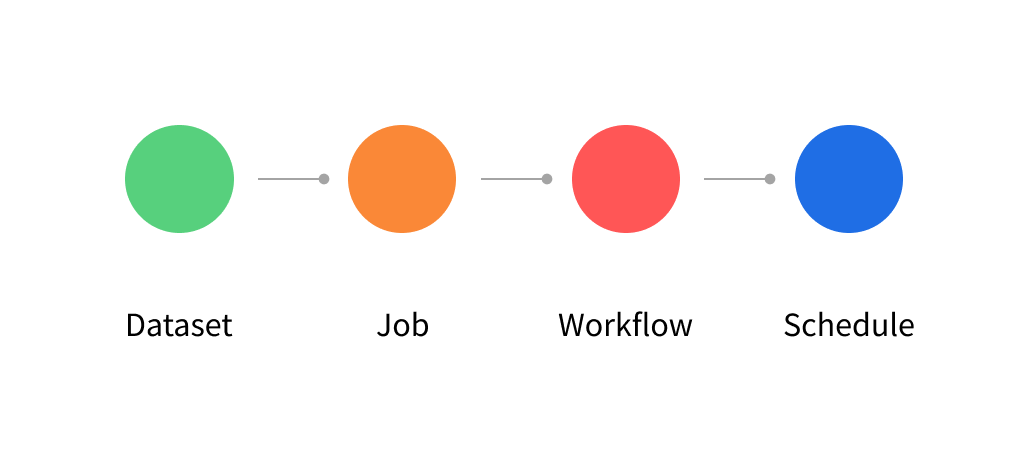
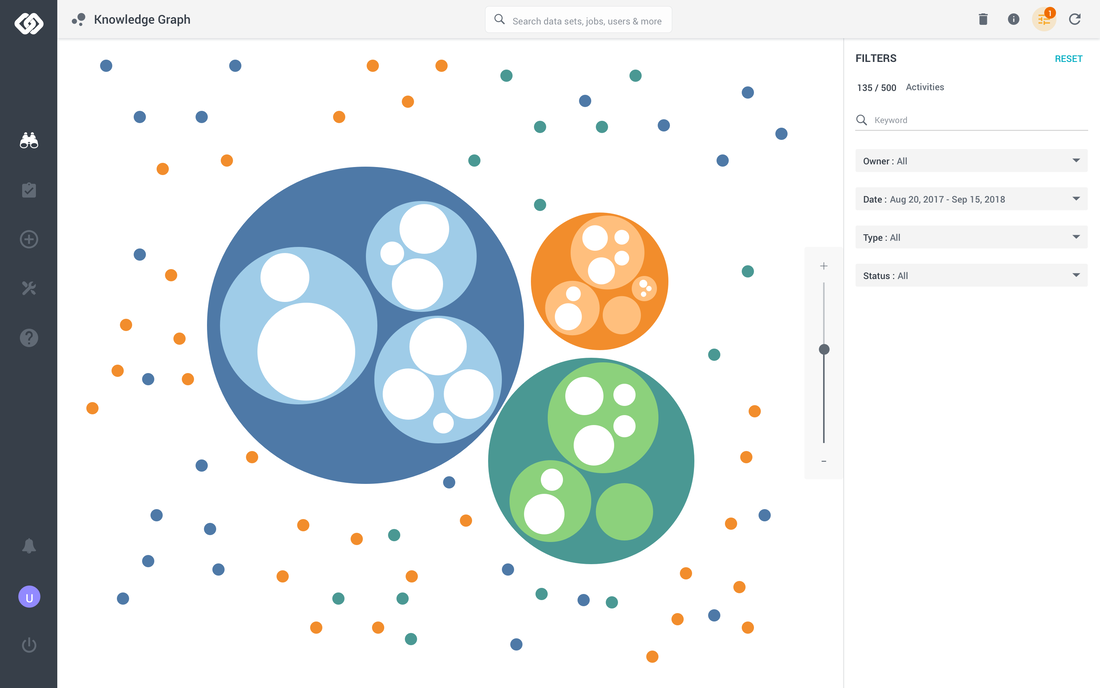
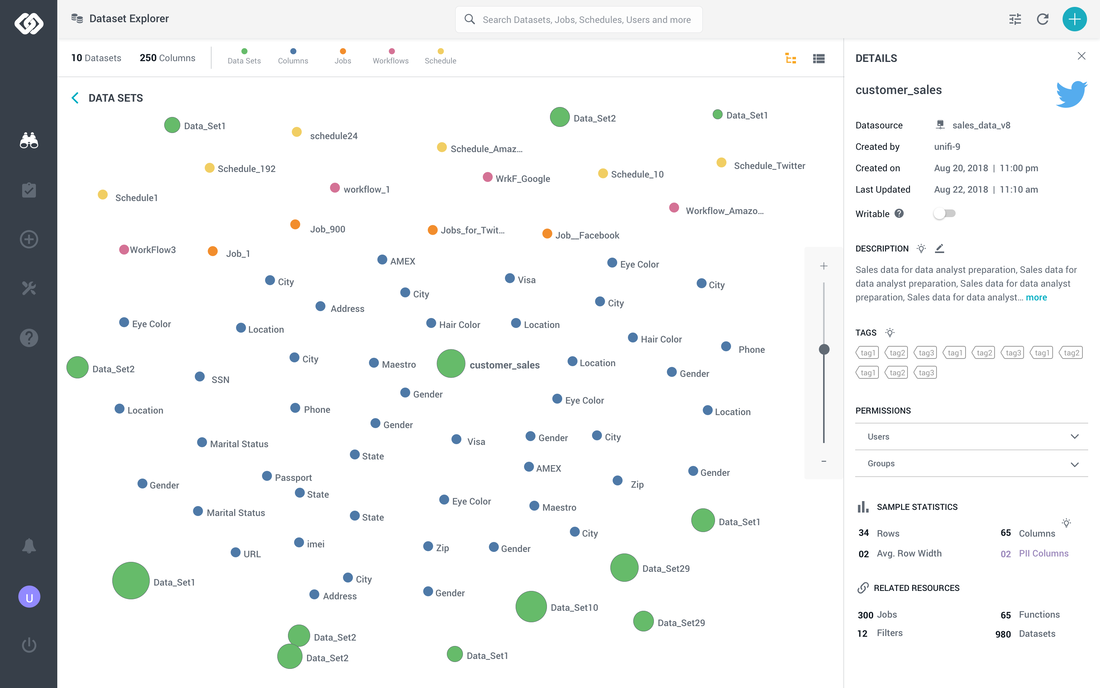
The project originated from field feedback highlighting the challenge of navigating a complex mesh of data. Users needed to understand components such as columns, datasets, jobs, derived attributes, metadata, workflows, and schedules.
Design explorations focused on visualization, navigation, and layout. I created concept sketches and high-fidelity mock-ups, including flows, interactions, and visuals. Animations were developed to communicate behaviors and transitions to engineers.
Main Screens
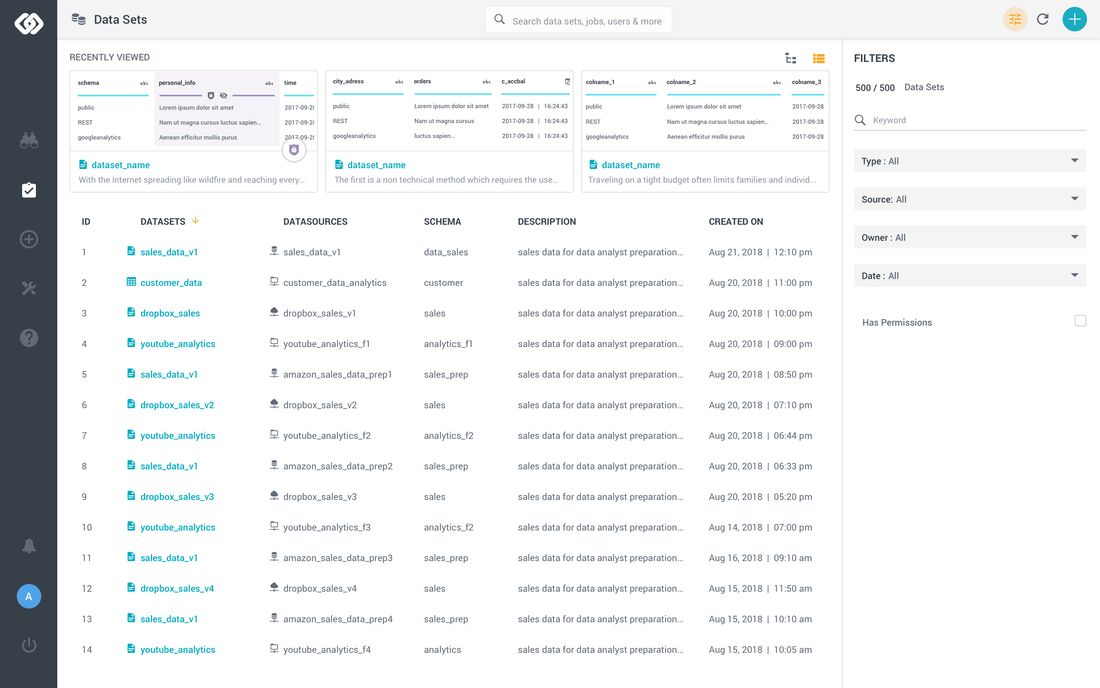
TABULAR VIEW
GRAPHICAL VIEW

Research
Extensive research informed the design, including:
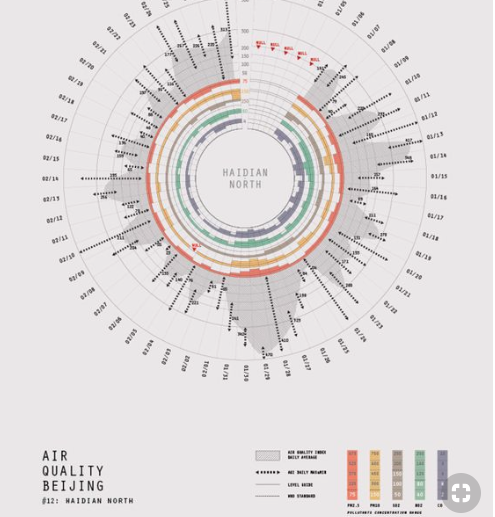
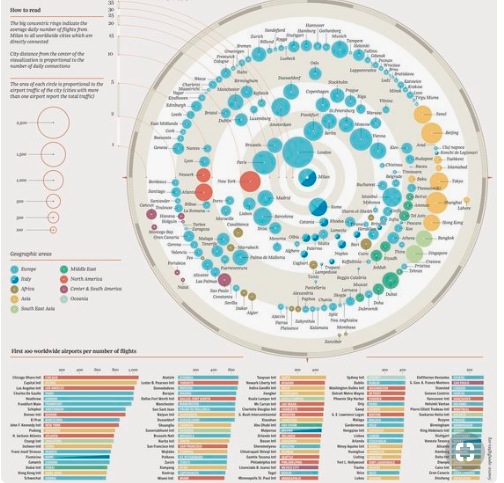
Reviewing data visualization patterns and competitor platforms.
Understanding engineering constraints and technical feasibility.
Synthesizing field feedback to clarify user pain points.Design explorations for data visualization, navigation, and layout.





Exploration
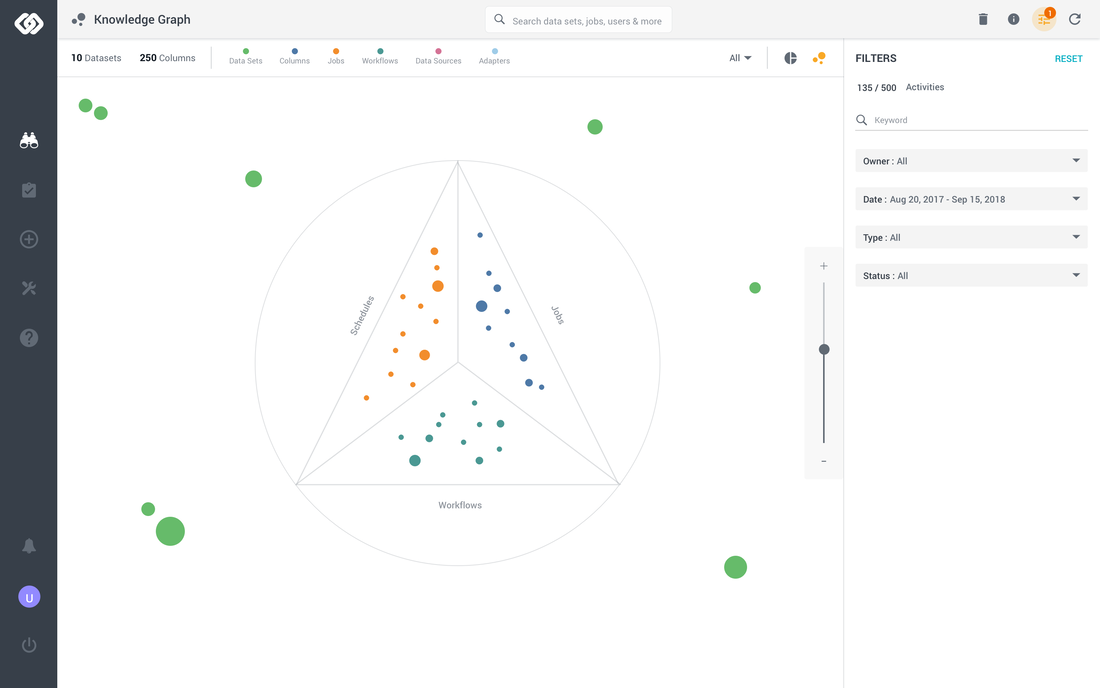
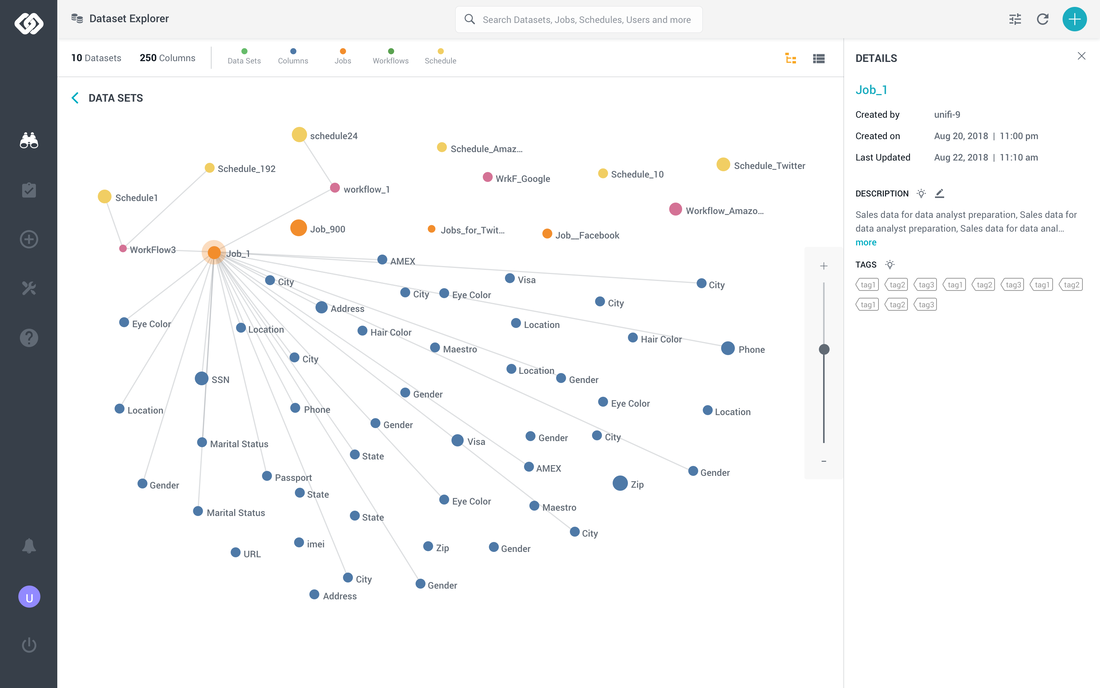
I explored multiple approaches for data visualization, navigation, and layout. This included concept sketches, high-fidelity mock-ups, interaction flows, and visual designs. I also created animations to help engineers understand behaviors, transitions, and interactions.






Impact
Through iterative design and validation, I introduced an “atom” based visualization framework that transformed fragmented analytical workflows into a unified interactive experience.
By enabling Data Scientist users to zoom between high-level system activity and granular component relationships, the solution made complex datasets easier to explore, interpret, and act on.
Outcomes Included:
• Faster pattern recognition across large datasets
• More efficient exploratory analysis
• Improved visibility into relationships and dependencies
• Quicker access to critical signals and anomalies
• Stronger confidence in data interpretation
• Reduced friction between high-level insights and detailed investigation
Screen 1 - Tabular View
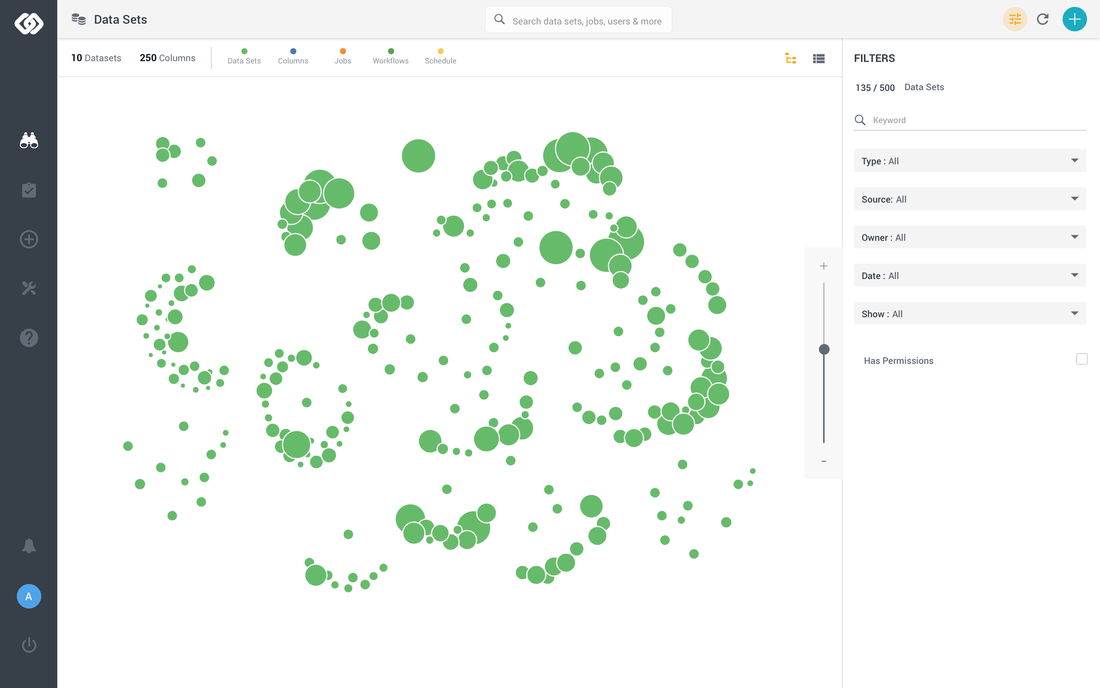
Screen 2 - Dataset Graph View

Screen 3 - Dataset Zoom In View

Screen 4 - Hover over state for 'Jobs'

Screen 5 - Filtering for 'Workflows'

Screen 6 - Filtering for 'Jobs', 'Workflows' and 'Schedules'